All about me social work toolbox printables offer a starting point for learning about a young person’s interests, strengths, and preferred ways of expressing themselves. This original collection includes My Story, My Strengths, My World, and My Voice. Each page provides space to write or draw, with a reminder to share only what the person chooses. Select the sheet that matches the conversation you want to begin.
All About Me Social Work Toolbox Printables
Choose an Introduction That Fits the Person
A worksheet can provide a shared focus when a broad question such as “Tell me about yourself” feels difficult to answer. Offer a choice of designs and explain what will happen with the completed page. Someone might prefer drawing a symbol, naming an enjoyable activity, or describing how they like others to communicate with them.
My Story: A Personal Introduction
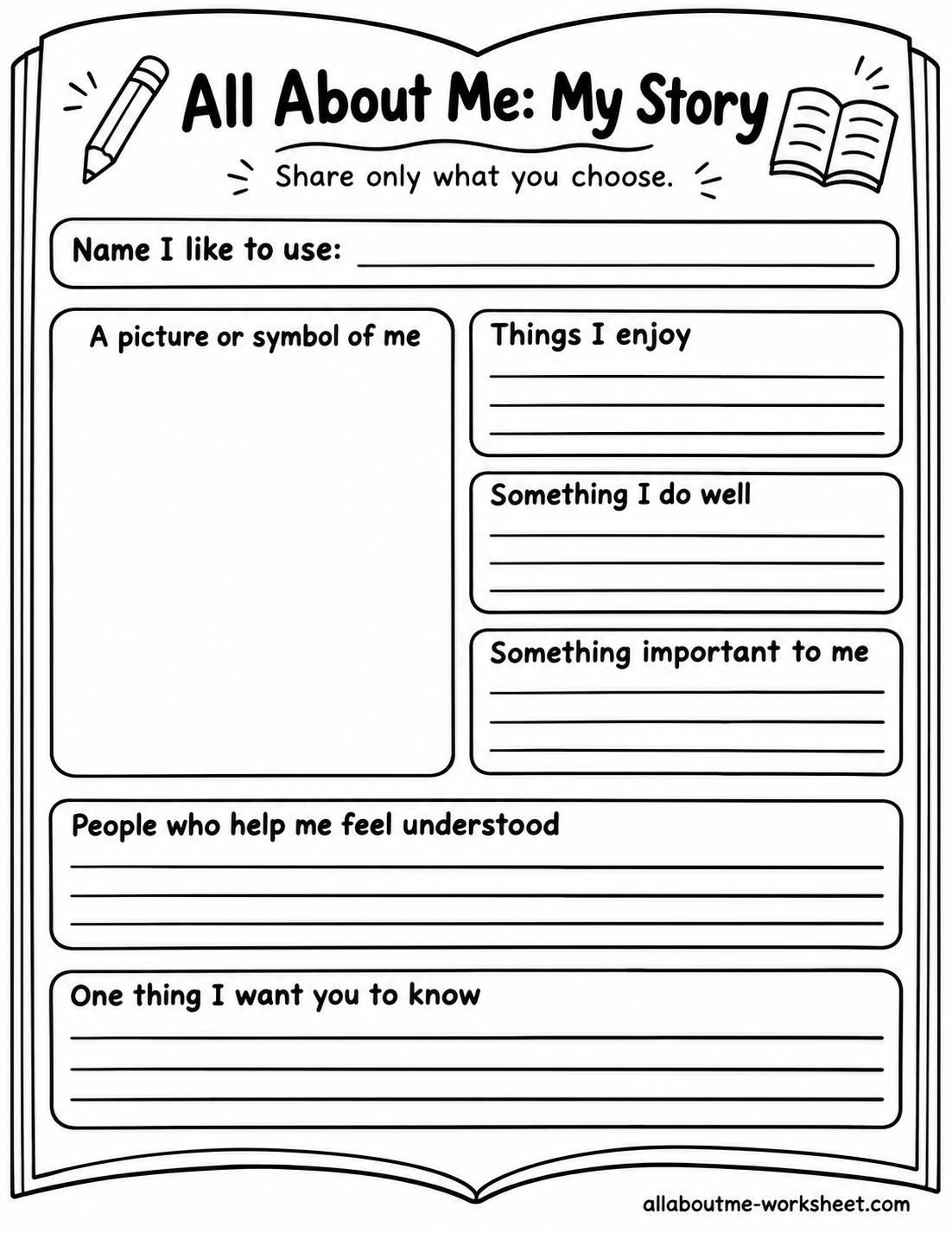
The open-book layout includes a name line, a large picture or symbol box, and writing spaces for enjoyable activities, personal abilities, and important things. The lower sections invite thoughts about people who help the writer feel understood and something they want someone else to know. Begin with whichever section feels easiest. A symbol can represent an interest or quality; it does not need to be a portrait.
My Strengths: A Shield of Abilities
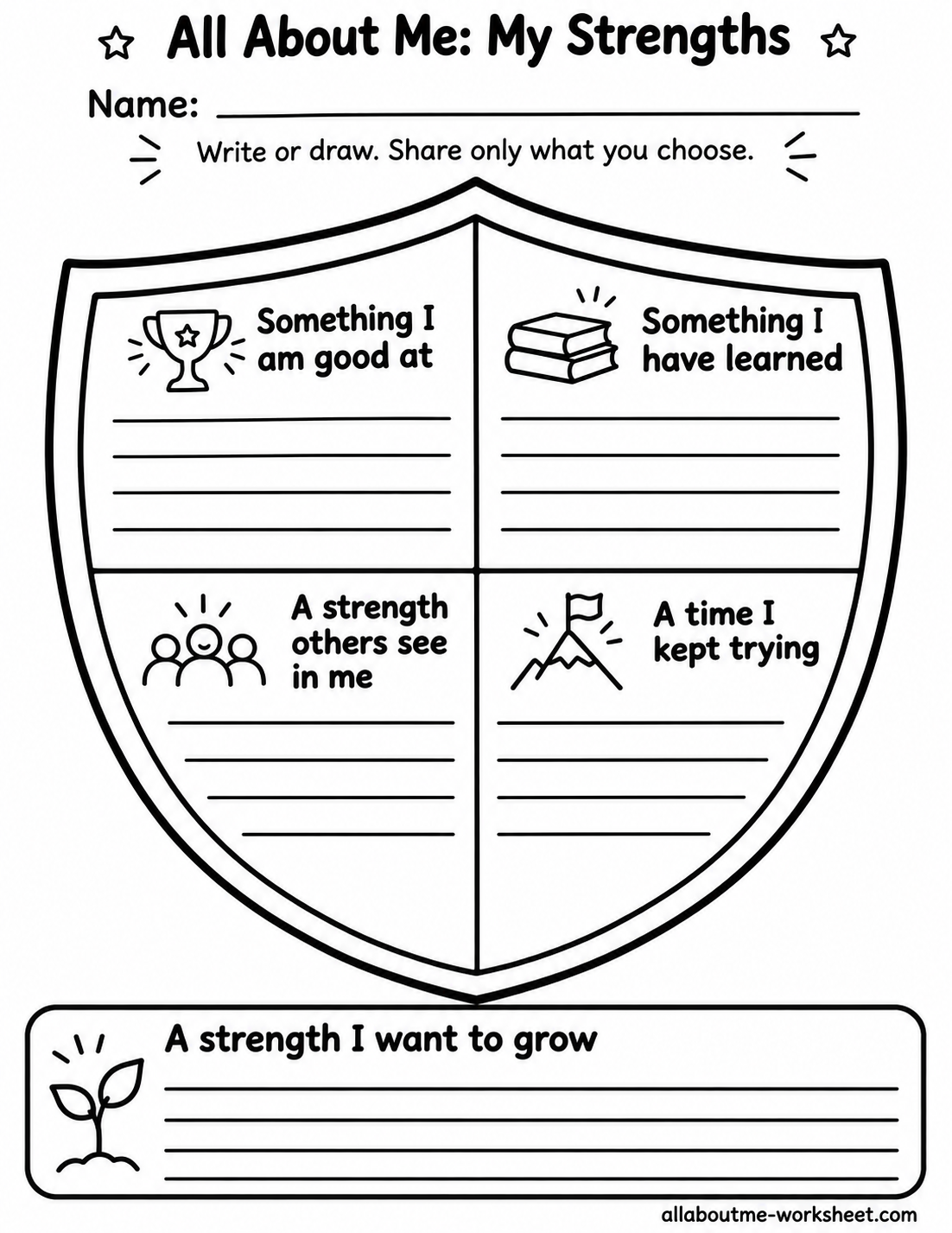
A large shield divides the page into four sections: something the person does well, something they have learned, a strength others notice, and a time they kept trying. The final box asks about a strength they would like to develop. Encourage ordinary examples, such as helping with a task or practicing a new skill. The person can describe their experience without having to choose an impressive achievement.
My World: People, Places, and Interests
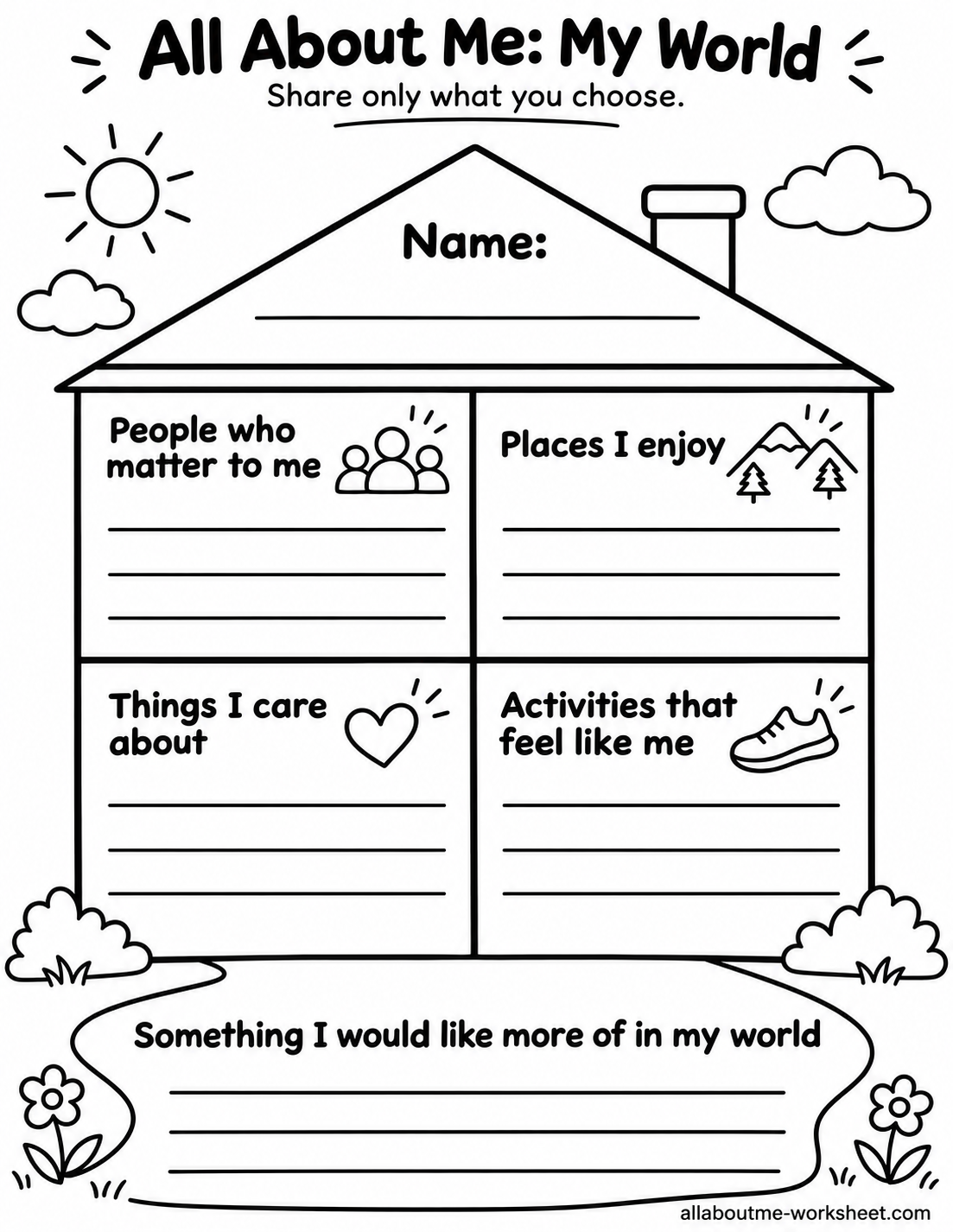
This house-shaped layout has four rooms for meaningful people, enjoyable places, important things, and activities that feel personally relevant. A path beneath the house asks what the writer would like more of in their world. Treat the house as a visual organizer. Responses can describe many settings and relationships; they do not have to concern a household or a particular type of family.
My Voice: How I Prefer to Express Myself
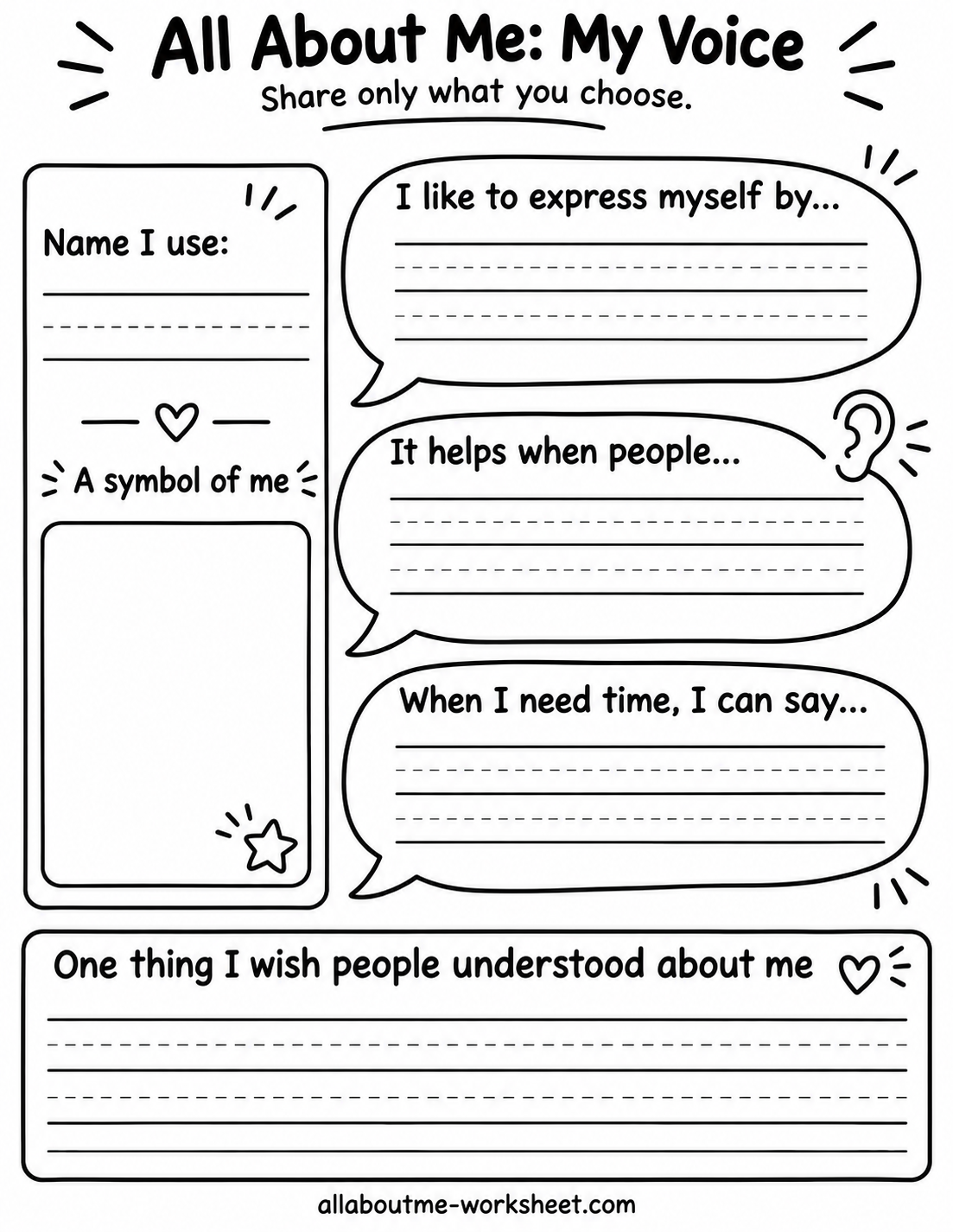
The speech bubbles ask about expression, helpful responses from other people, and words to use when more time is needed. A side panel holds a name and personal symbol, while the bottom section invites something the person wishes others understood. Use this page to discuss practical preferences, such as having time to think, writing an answer first, or receiving one question at a time.
How to Use an All About Me Social Work Toolbox
Begin with a clear, manageable invitation. You might say that the page is a way to choose a few things to share today. Read the prompts together if requested, then let the person decide the order. Keep your questions connected to what they have offered instead of moving quickly into unrelated topics.
- Offer a design choice. Place two or more sheets where the person can compare the layouts and select one.
- Explain the options. Writing, drawing, using short phrases, and leaving a section blank are all possible responses.
- Start with one prompt. Give the person space to answer before suggesting another area of the page.
- Check the meaning. Ask whether they would like to explain a word or picture; let them decide how much detail to add.
- Choose what happens next. Agree whether to keep the sheet, revisit it, or discuss one selected response further.
Questions That Keep the Person’s Voice Central
Use open invitations that leave room for different answers. Instead of supplying a label for a drawing, ask what the person would like you to know about it. If they identify a strength, invite an example only if they want to offer one. A brief answer can stand on its own. There is no need to turn every answer into a longer discussion.
- Which part would you like to start with?
- What would you like me to understand about this response?
- Would you prefer to write, draw, or talk about this?
- Is there anything you want to change or add?
When writing on someone’s behalf, check that your words match what they intended. Read the response back and offer a chance to revise it. A crossed-out word, a new drawing, or a changed answer can remain part of the person’s work.
Printing and Preparing the Worksheets
Open the downloaded WebP image at full size. Select US Letter paper, portrait orientation, and a setting that fits the entire image within the printable area. Check the print preview before printing, especially the page heading and allaboutme-worksheet.com footer. A setting that fills the paper by cropping the image can remove parts of the design.
Use a test copy to check readability and writing space. Pencils, pens, and colored pencils can be offered according to preference. Keep an extra blank sheet available when someone wants more room for a drawing or longer response.
What Should Happen After the Activity?
Finish by asking which response, if any, the person wants to discuss. For example, a preference written on My Voice could guide how you ask the next question. Explain who will see the page before collecting, copying, or displaying it. If you return to the activity later, invite updates rather than expecting the same answers. Interests and preferred ways of sharing can vary from one occasion to another.
Another Printable to Explore
For a school-focused alternative, explore SPAN Parent Advocacy Network’s All About Me worksheet, a one-page profile covering strengths, interests, support, outside activities, and hopes for the future.
“`